Gold vs Silver: Which Precious Metal is Better for Investment?
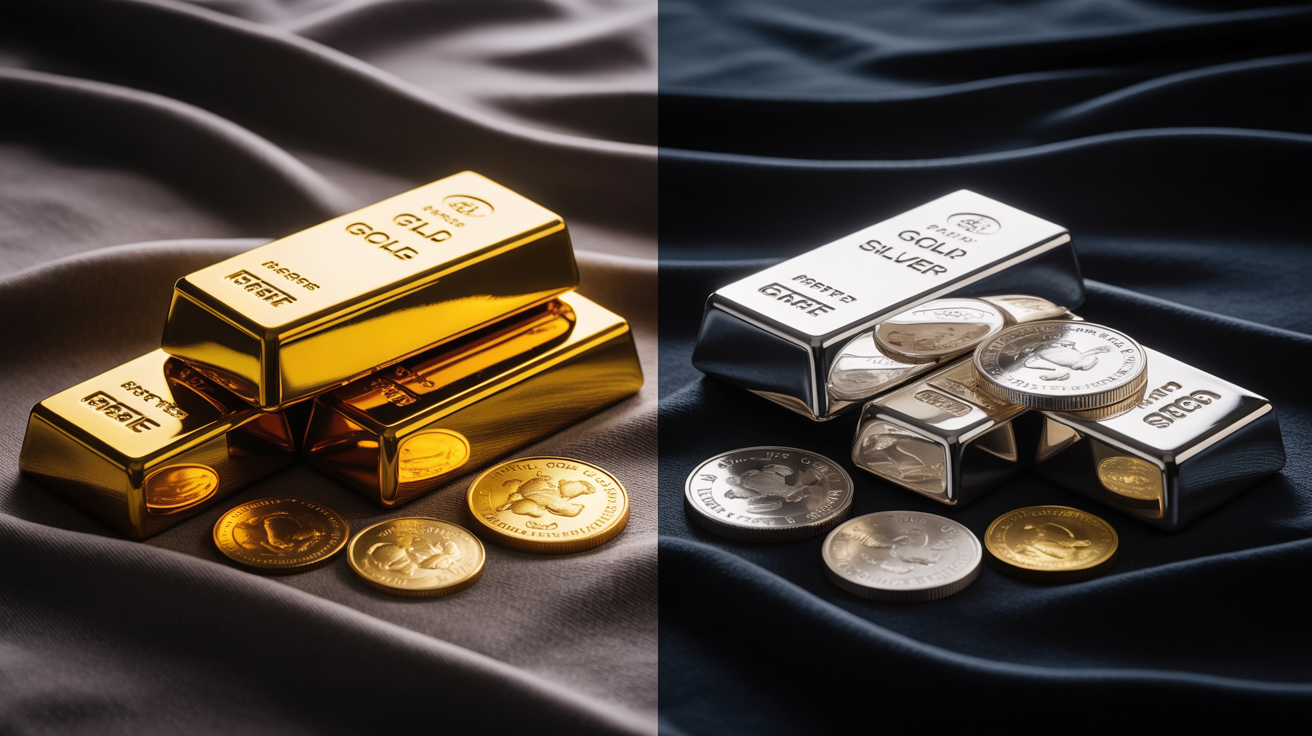
Precious metals have been valued for thousands of years, serving as currency, jewelry, and stores of value. For modern investors, gold and silver remain popular choices for portfolio diversification and inflation protection. But which metal is the better investment? Let's compare these two precious metals across several important dimensions.
Historical Performance
Both gold and silver have demonstrated long-term value preservation, but their performance characteristics differ significantly.
Gold has historically been more stable, acting as a reliable store of value during economic uncertainty. Central banks around the world hold gold reserves, reinforcing its status as a monetary asset.
Silver tends to be more volatile, with larger percentage swings in both directions. This volatility can mean higher potential returns but also greater risk.
The Gold-to-Silver Ratio
The gold-to-silver ratio measures how many ounces of silver it takes to buy one ounce of gold. Historically, this ratio has averaged around 60:1, but it has ranged from 15:1 to over 100:1. Some investors use this ratio to determine which metal offers better relative value at any given time.
Industrial Demand
Silver has significant industrial applications in electronics, solar panels, medical devices, and more. Approximately 50% of silver demand comes from industrial uses, making its price more sensitive to economic cycles and technological trends.
Gold has limited industrial use (primarily in electronics and dentistry), with most demand coming from jewelry and investment. This makes gold prices more dependent on investment sentiment and less tied to economic growth.
Investment Vehicles
Both metals offer multiple investment options:
- Physical bullion: Coins, bars, and rounds
- ETFs: Exchange-traded funds that track metal prices
- Mining stocks: Shares in companies that extract precious metals
- Futures and options: Derivative contracts for more sophisticated investors
Storage and Practicality
Gold is much more compact — $50,000 worth of gold fits in your pocket, while the same value in silver would weigh over 100 pounds. This makes gold easier and cheaper to store and transport.
Silver's bulk can be an advantage for smaller investors, as its lower price per ounce makes it more accessible for those starting with smaller amounts.
Price Points and Accessibility
Silver's lower price point makes it more accessible to beginning investors. You can start building a silver position with just a few dollars, while gold requires a larger initial investment to purchase even a small amount.
Which Should You Choose?
The "better" investment depends on your individual circumstances:
Choose Gold if:
- You prioritize stability and wealth preservation
- Storage space is limited
- You're making larger investments
- You want an asset recognized globally as money
Choose Silver if:
- You're comfortable with higher volatility for potentially higher returns
- You believe in growing industrial demand
- You're starting with smaller amounts
- You want more "upside" potential
Diversification Approach
Many precious metals investors hold both gold and silver, benefiting from gold's stability while capturing silver's growth potential. A common approach is to allocate a larger percentage to gold for security while maintaining a smaller silver position for potential gains.
Conclusion
Neither gold nor silver is universally "better" — each serves different purposes in an investment portfolio. Consider your goals, risk tolerance, and investment timeline when deciding how to allocate between these precious metals. Use our Precious Metals Converter to track current spot prices and calculate values in different weights.